

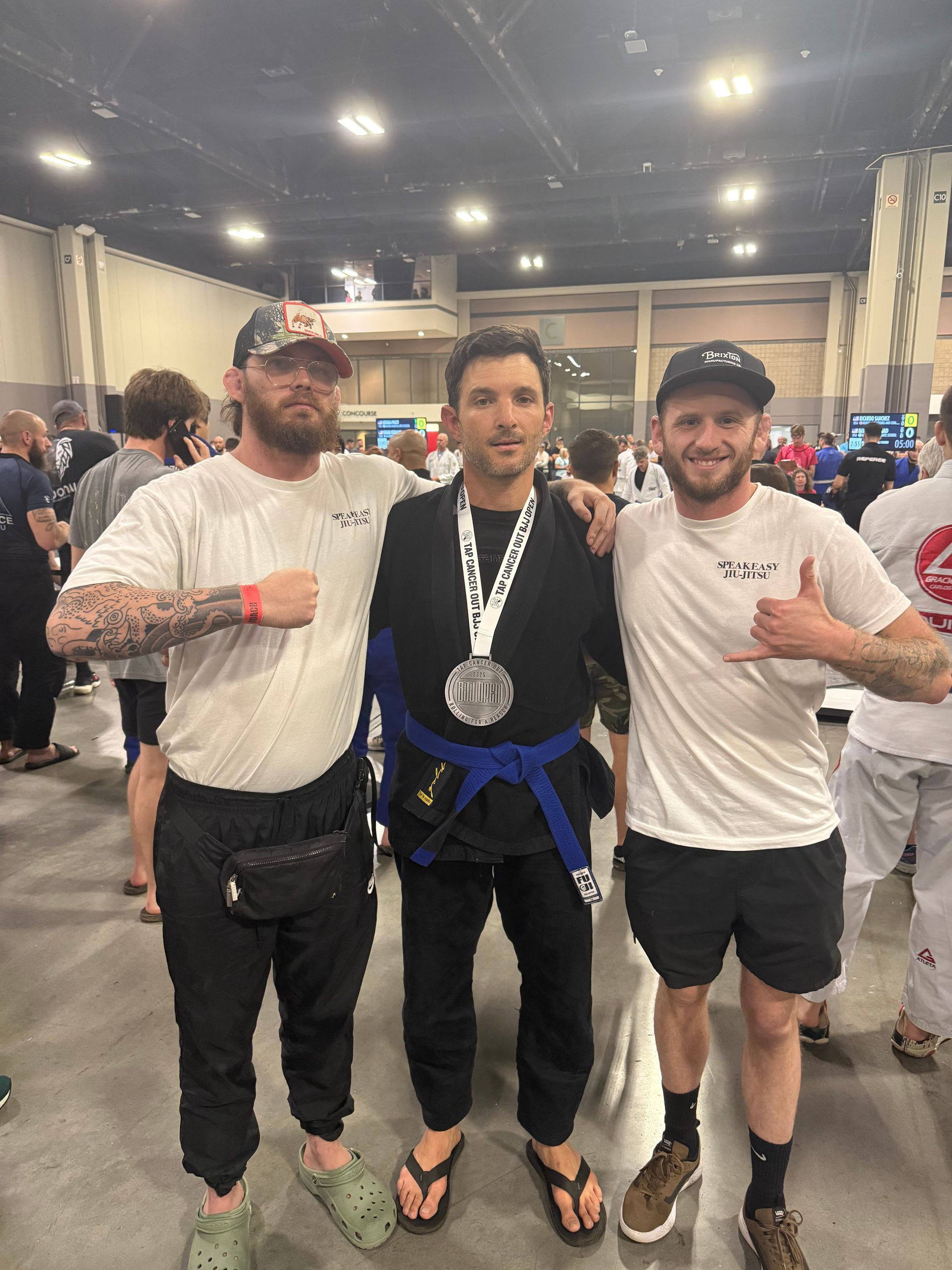
Real confidence is built in small, repeatable moments where you learn to stay calm, solve problems, and keep going.
Confidence is a funny thing in Asheville. Our town is packed with capable people, but the day to day grind can still rattle you: seasonal work shifts, tourism pace, family schedules, and that background hum of stress that never fully leaves after the last few years. We see it all the time when new students walk in. You can be strong and still feel unsure.
Jiu-Jitsu gives you a practical way to build confidence that lasts because it is not based on hype or personality. It is based on evidence you can feel in your body: better balance under pressure, clearer decisions, and the steady realization that you can handle hard moments without freezing. And yes, we mean that in a very real, Monday morning kind of way.
What makes this especially relevant for Jiu-Jitsu in Asheville is the culture we live in. Asheville attracts people who care about wellness, outdoors, and personal growth, but not everyone wants another abstract self improvement plan. Our mat time is tangible. You show up, you learn, you practice, you get a little better, and you carry that confidence back into work, school, relationships, and everyday life.
Why Jiu-Jitsu creates confidence you can actually keep
A lot of “confidence” advice is basically positive thinking with better branding. In training, we build confidence through a different mechanism: repeated exposure to manageable stress, followed by skillful problem solving. That combo changes you.
Research backs up what we see on the mat. In surveys of Brazilian Jiu-Jitsu practitioners, 87.6 of adults report increased confidence, 87.5 report reduced anxiety, and 96.9 report improved mood. Community and respect matter too, with 100 reporting a stronger sense of belonging. Parents report similar results for kids, with 96.4 observing better confidence and 92.8 seeing improved discipline. Those numbers are not magic, but they match the pattern we watch unfold every week.
The most important detail is that confidence grows from competence. In Jiu-Jitsu, competence is measurable: you escape more often, you breathe instead of panic, you recognize positions, you make better choices, you recover after mistakes. That’s lasting confidence because it does not depend on someone complimenting you.
The Asheville advantage: pressure is everywhere, so training matters
Asheville is beautiful, but it can be demanding. Service industry shifts, healthcare schedules, the remote work blur, parenting in a busy town, and the “always on” social pace can all pull you off center. The good news is that training teaches a skill most adults rarely practice on purpose: staying present while your heart rate is up.
Jiu-Jitsu builds comfort with discomfort in a controlled environment. You learn to think while someone is trying to hold you down. You learn that you can pause, frame, move your hips, and get space. Then, later, when you are dealing with a tense conversation or a high stakes deadline, your nervous system has practice. You have been there before, in a safe way, with coaching.
That is why many people describe it as a secret weapon. Not because it is mysterious, but because the results show up quietly: you walk taller, you speak more clearly, you recover faster when life gets messy.
How confidence is built on the mat, step by step
You start with structure, not chaos
Our beginner experience is designed to be predictable. You warm up, learn technique in a focused way, drill it, and then apply it with partners who understand that beginners are learning. Structure reduces the “I have no idea what is happening” feeling that can sabotage confidence early.
We also keep the language practical. Positions are taught as problems to solve, not trivia to memorize. That matters because your brain learns faster when it understands the why. When you know the goal, you feel capable sooner.
You learn to breathe under pressure
People underestimate breathing until they are in a tight position and realize their first impulse is to hold their breath. One of the first confidence wins we see is simple: students start breathing through pressure instead of fighting it. The moment you can inhale calmly while someone has control, your mind changes. You stop assuming you are stuck.
This is where anxiety reduction makes sense. If 87.5 of practitioners report less anxiety, it is not because training erases stress. It is because training teaches your body a new default response: breathe, frame, move, retry.
You get immediate feedback, which builds self trust
Jiu-Jitsu gives instant feedback. If a grip is wrong, it slips. If your base is weak, you fall. If your timing is better, you escape. That feedback loop can feel humbling at first, but it becomes empowering fast because improvement is obvious.
Over time, that builds self efficacy, the belief that your actions matter. Research shows that training experience correlates with higher mental strength, grit, and self control, with advanced practitioners reporting fewer mental health issues than beginners. We do not chase belts for vanity. We respect belts because they represent accumulated self trust.
What “lasting confidence” looks like off the mat
We like to be specific because vague promises are easy. Here are common real life changes students report once they train consistently.
• You handle conflict with less adrenaline, because your body has learned not to spike as easily under pressure
• You set boundaries more clearly, because you know what it feels like to hold your ground and stay calm
• You recover faster from mistakes, because tapping and resetting teaches resilience without drama
• You feel more comfortable being a beginner, which oddly improves your confidence at work and in hobbies
• You sleep better on training days, because your stress has a place to go and your mind quiets down afterward
This is one reason Jiu-Jitsu stands out. Studies suggest practitioners see a 38 greater confidence increase compared to traditional martial arts, likely because grappling forces constant problem solving with real resistance. You cannot “pretend” it works. You either adapt, or you learn again.
Kids Jiu-Jitsu in Asheville: confidence without aggression
Parents often want the same thing in different words: “I want my kid to be confident, but I do not want my kid to be a bully.” We agree. Good training builds calm confidence, not swagger.
Our kids program focuses on discipline, emotional regulation, and respectful partner work. The goal is not to win at all costs. The goal is to learn control. That includes learning when to stop, how to be a good teammate, and how to manage frustration when something is hard.
The data aligns with what parents tell us. In youth surveys, 96.4 of parents report improved confidence and 92.8 report increased discipline. Those are big numbers, and we think part of the reason is that kids get a safe place to test themselves. They learn that nerves are normal, effort is expected, and progress is possible.
If you are looking specifically for kids Jiu-Jitsu in Asheville, consider what “confidence” should mean for your child. We aim for the kind that shows up in school: raising a hand, trying out for a team, speaking up kindly, and bouncing back after a bad day.
The role of community in confidence, especially in a mountain town
Asheville is welcoming, but it can also be transient. People move, schedules change, seasons shift. One of the underrated benefits of training is having a consistent place where you are known, challenged, and supported.
In practitioner surveys, 100 report a stronger sense of community and respect. That does not happen by accident. Partner training requires trust. You learn each other’s styles, you learn how to keep training safe, and you learn how to help someone else improve. Over time, it becomes a real social anchor.
We keep our culture simple: work hard, stay humble, take care of partners. When you feel safe in a room full of pressure testing, your confidence grows in a grounded way.
What to expect in our adult program (and how we keep it safe)
A common barrier is fear of injury or fear of looking awkward. Both are understandable. We address safety through coaching, pacing, and a clear approach to partner work.
Safety is a skill, not a slogan
We teach tapping early and often. We coach students to apply techniques with control, not ego. And we match training intensity to experience so you can build conditioning and awareness over time.
Because Jiu-Jitsu uses leverage, smaller people can train effectively. That is one of the reasons it is so confidence building. You learn that technique changes outcomes, and you do not need to rely on being the biggest person in the room.
Progress is built into the system
Belts matter because they create milestones you can feel. You do not need to obsess over rank, but the progression is useful: it shows you that effort compounds. Research suggests meaningful benefits can emerge in as little as 2 to 5 months when training at least twice per week, while long term training is associated with increased grit and mental toughness.
We encourage consistency over intensity. Two to three classes a week beats one “hero workout” followed by a long break. Confidence grows from showing up again.
A practical timeline for confidence gains
Here is the pattern many students experience when they train consistently.
1. Weeks 1 to 4: You learn the basics, feel a little overwhelmed, and then notice small wins like better breathing and fewer panic reactions
2. Months 2 to 3: You recognize positions more quickly, escapes start working, and anxiety around sparring drops noticeably
3. Months 4 to 6: You develop a “game” that fits your body, your confidence rises off the mat, and your conditioning improves
4. Long term: You build resilience that carries into work and family life, with deeper self control and mental flexibility
This is not a promise of perfection. You will still have hard days. But you will have a toolkit, and you will trust it.
Jiu-Jitsu in Asheville for professionals who carry stress
Some careers come with extra pressure: healthcare, hospitality leadership, educators, and public safety roles. National trends from 2022 to 2025 show growing interest in BJJ as a supportive practice for veterans, first responders, and police, including improved stress management and confidence in defensive tactics. We take that seriously.
Our goal is not to turn you into a different person. It is to help you function better as yourself under stress. Training gives your nervous system a structured outlet. It also teaches restraint, which is a form of confidence that is easy to miss until you need it.
Take the Next Step
If you want confidence that does not fade when life gets busy, Jiu-Jitsu gives you a repeatable path: learn fundamentals, practice under pressure, and stack small wins until your self trust is real. That is the “secret weapon” part. It is quiet, steady, and surprisingly transferable.
At Speakeasy Jiu-Jitsu & Wrestling Academy, we built our classes so you can start where you are and improve without needing a certain body type or background. When you are ready, we would love to help you train with purpose, progress with clarity, and feel that lasting confidence show up in everyday Asheville life.
Build stronger grappling skills and improve your technique by joining a Jiu-Jitsu program at Speakeasy Jiu-Jitsu & Wrestling Academy.