

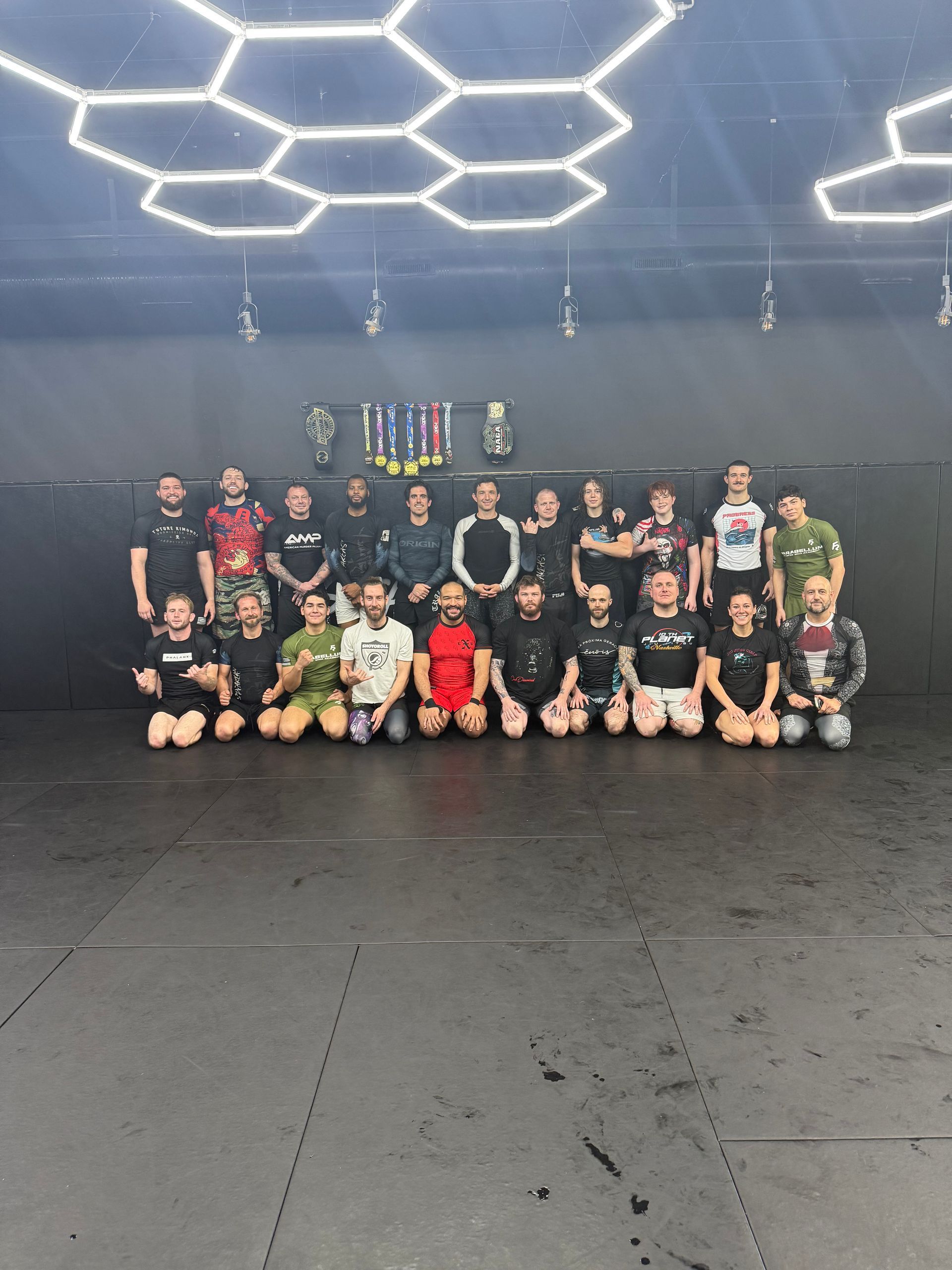
The real surprise of Jiu-Jitsu is how quickly it changes the way you think, not just how you move.
In Asheville, we care about feeling capable, steady, and healthy in real life, not only in a workout sense. That’s one reason Jiu-Jitsu keeps catching people off guard in the best way: you come in expecting to get in shape and learn some technique, and you leave noticing you’re calmer in traffic, clearer at work, and more confident in conversations.
We see it across beginners, long-time athletes, and total “I’ve never done anything like this” newcomers. Research backs up what we watch unfold on the mats, too: advanced Brazilian Jiu-Jitsu practitioners tend to show higher resilience, grit, self-control, self-efficacy, and life satisfaction than brand-new students, with fewer reported mental health disorders overall. Experience matters, and consistent training builds those traits over time.
Below are five unexpected ways Jiu-Jitsu supports personal growth, especially for adults, families, and kids here in Asheville. Some changes are loud (better fitness, sharper reflexes). Some are quiet (how you handle stress, how you talk to yourself after a tough day). The quiet ones are often the most valuable.
1. Neuroplasticity that turns “pressure” into “problem-solving”
Jiu-Jitsu is a moving puzzle. You’re not repeating the same motion in a vacuum, you’re making decisions in real time, with a partner who has plans of their own. That constant problem-solving is one reason current training trends (2023 to 2024) emphasize neuroplasticity: your brain adapts to complex patterns, timing, and stress management the same way your muscles adapt to training load.
Here’s what that means on a normal Tuesday: you get comfortable being uncomfortable. When you’re pinned, you learn to breathe, frame, make space, and rebuild position. No panic required. That skill tends to leak into everyday life in a good way. Work deadlines, tough conversations, unexpected bills, kids melting down in a grocery store aisle, all of it starts to feel more manageable because you’ve practiced staying functional under pressure.
A widely cited trend stat in martial arts training reports that 92% of trainees who practiced twice weekly noticed gains in focus and resilience. The number isn’t magic, but the pattern is real: consistency is the engine. When you train regularly, you develop an internal “reset button” that shows up outside class.
What we coach to build this kind of calm
We don’t treat composure as a personality trait you either have or don’t have. We treat it as a skill you can practice.
• Breathing and pacing: you learn when to slow down and when to explode, instead of living at one speed
• Positional priorities: you focus on small wins that stack into big progress
• Technical escapes: you rehearse solutions, not just effort
• Live training: you practice decision-making when things are messy and unpredictable
• Reflection: you notice patterns, fix one thing at a time, and keep going
If you’ve ever wanted a way to feel more “together” in stressful moments, this is one of the most unexpected gifts of Jiu-Jitsu.
2. Humility that doesn’t shrink you, it steadies you
There’s a difference between being humbled and being humiliated. Jiu-Jitsu gives you humility in the best possible way: it shows you reality, then hands you tools to improve it. You tap, you reset, you try again. It’s strangely freeing.
In a world that rewards pretending, the mats reward honesty. If a technique doesn’t work, it doesn’t work. You don’t get to talk your way out of physics. That creates a kind of grounded confidence that’s hard to fake and honestly, hard to shake.
This is also where personal growth starts to feel practical. You learn how to take feedback without spiraling. You learn how to be a beginner again, even if you’re successful elsewhere. Over time, competence grows, but ego tends to soften around the edges. That balance is rare.
In Asheville, where many people care about wellness and self-awareness, this part lands. Jiu-Jitsu can sit right alongside hiking, yoga, and therapy as a real “do the work” practice, except this work includes timing, leverage, and a little sweat.
3. Family bonding that’s built on shared effort, not just shared time
A lot of family time is passive: screens, car rides, busy schedules, quick meals. Training flips that. When you and your child train, you share effort. You share the weird little victories, too, like the first time your kid remembers to shrimp properly, or the first time you stay calm during a tough round instead of holding your breath.
Family participation trends in martial arts show big confidence and discipline gains in kids, plus meaningful reductions in bullying risk. One cited set of outcomes includes about 75% improved confidence, 70% improved discipline, and roughly a 50% reduction in bullying risk when kids learn assertiveness and boundaries in a structured environment. That aligns with what we aim to build in kids classes: confidence that looks like posture, eye contact, and clear communication, not chest-thumping.
When people search for kids Jiu-Jitsu in Asheville, they’re usually looking for more than activity. They want their child to handle pressure, make friends, listen better, and feel safe in their own skin. The nice part is that these skills aren’t taught as lectures. Kids learn them through games, drills, and partner work where respect is non-negotiable.
How family training translates into real-life changes
You may notice shifts like:
• Better conflict skills: your child learns how to be assertive without being aggressive
• Improved emotional control: practice teaches “pause, then act” instead of reacting instantly
• Stronger follow-through: small routines add up to big consistency over months
• Healthier confidence: kids see progress as something earned, not something granted
• Shared language: families start using the same cues like “breathe” or “make space” at home
Jiu-Jitsu in Asheville can become a shared family rhythm, and that’s surprisingly powerful.
4. Quiet self-efficacy that changes how you show up everywhere
Self-efficacy is a simple idea with huge impact: you believe you can handle what’s in front of you. Not because you’re “positive,” but because you’ve been tested and you’ve adapted.
Studies comparing belt levels in Brazilian Jiu-Jitsu show that black belts tend to score higher in mental strength, resilience, grit, self-control, and life satisfaction than white belts. That doesn’t mean beginners get nothing, it means personal growth compounds with time. Every class is a small deposit into the “I can figure this out” account.
And here’s the quiet part: you don’t always notice it happening until you catch yourself doing something different in daily life. You speak up in a meeting without rehearsing it ten times. You set a boundary with a friend without apologizing for it. You take a hard day and don’t make it mean something dramatic about who you are.
We also see that the skill-building process itself matters. Jiu-Jitsu gives you a structured path where effort connects to outcome. That can be refreshing in modern life, where so much feels abstract. On the mats, if you show up and train thoughtfully, you improve. Not perfectly, not instantly, but clearly.
5. Stress relief that’s physical, social, and surprisingly therapeutic
People often think stress relief has to be quiet. Sometimes it does. But there’s another kind of relief that comes from doing something demanding with clear rules, supportive partners, and an obvious goal.
Jiu-Jitsu is intense enough to pull your attention into the present moment. That’s part of why it can support mood, focus, and stress reduction: your brain gets a break from spinning narratives because it has to solve what’s happening right now. Add in the social connection of training partners, and you have a strong recipe for mental health support.
Recent research and trends also highlight Brazilian Jiu-Jitsu as a beneficial practice for veterans and first responders, including support with self-esteem and PTSD symptom reduction. We take that seriously. Training should be challenging, but it should also be emotionally safe and respectful. You can work hard without being thrown into chaos.
For a lot of adults, the stress relief comes from three places at once:
1. Physical exertion: the nervous energy has somewhere to go
2. Skill learning: progress gives your mind a clean target
3. Community: you’re around people working on something real
This matters in Asheville, where many people are high-performing, outdoorsy, service-oriented, or just plain busy. Jiu-Jitsu becomes a consistent place to reset and reconnect, without needing to talk through everything first. Sometimes the talking comes later, and that’s fine.
What to expect if you’re new to Jiu-Jitsu in Asheville
Starting anything new can feel awkward, especially something as hands-on as grappling. We keep the learning process practical and beginner-friendly. You’ll work with fundamentals first: posture, base, movement, escapes, and positional control. You’ll learn how to train safely, tap early, and build confidence without feeling like you need to “prove” anything.
If you’re wondering about membership options, we set those up to match how people actually live: some students train a couple times per week, some train more, and families often coordinate schedules so everyone can stay consistent. The best plan is the one you can stick with, because consistency is what drives the growth benefits people talk about.
And yes, you can absolutely start without being “in shape.” Jiu-Jitsu helps you get in shape. Over time, you’ll likely notice better cardiovascular conditioning, muscular endurance, flexibility, coordination, and body awareness. Many students also experience healthy weight changes simply because training is demanding and regular.
Take the Next Step
If you’re looking for Jiu-Jitsu in Asheville because you want more than a workout, we understand that. These five growth shifts, resilience under pressure, steady humility, stronger family bonds, quiet self-efficacy, and real stress relief, tend to show up when training is consistent and the environment is supportive.
That’s exactly what we build at Speakeasy Jiu-Jitsu & Wrestling Academy: a place where beginners can start comfortably, families can train together, and long-term progress is a normal expectation, not a rare outcome.
Continue your Jiu-Jitsu journey beyond this article by joining a class at Speakeasy Jiu-Jitsu & Wrestling Academy.