

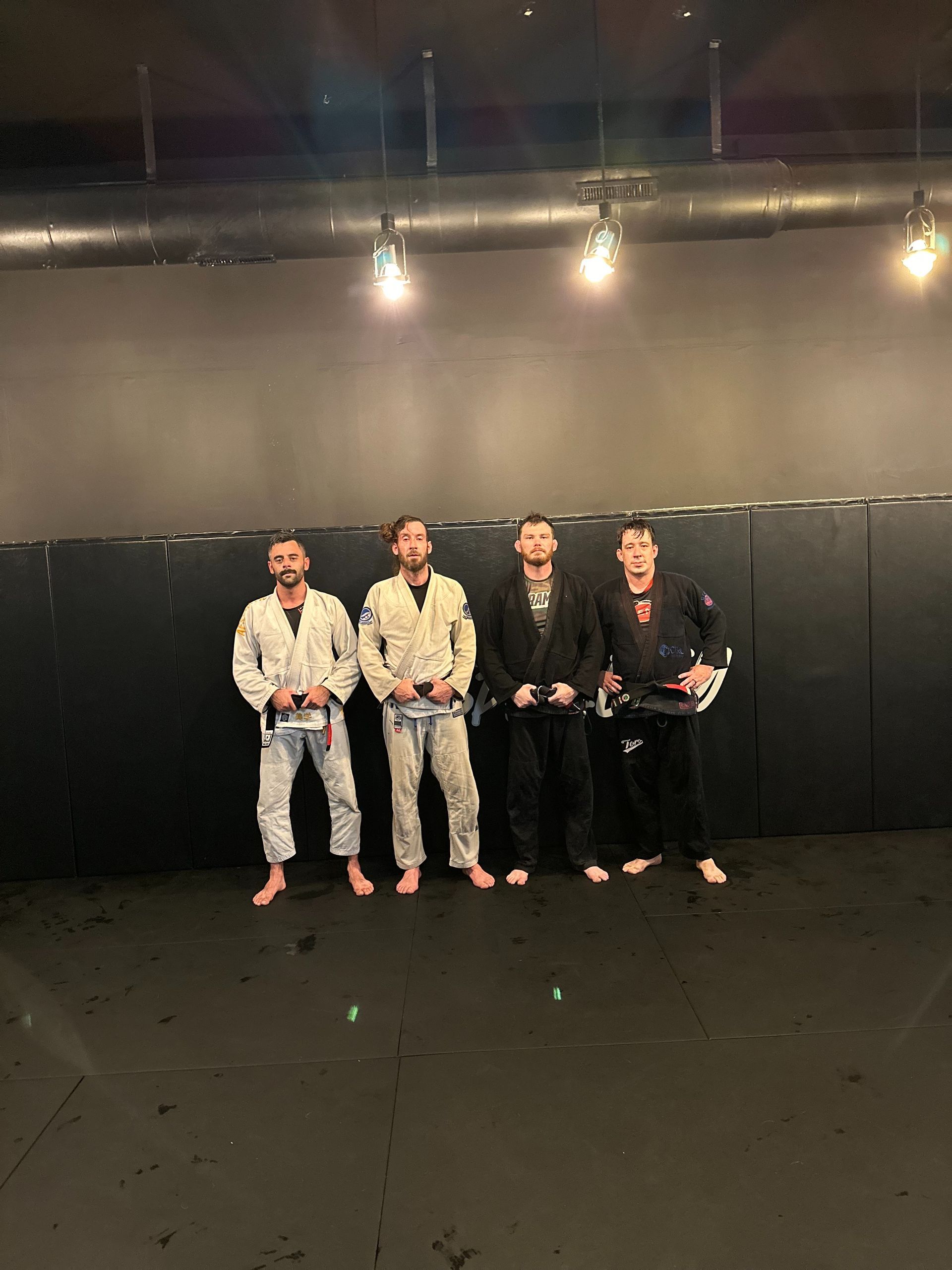
Jiu-Jitsu is one of the few workouts where your mind gets quieter because it has to.
If you have ever left a workout physically tired but mentally louder, you are not alone. A lot of fitness helps the body while the brain keeps spinning. Jiu-Jitsu is different because it forces attention into the present moment: balance, breathing, grips, timing, and small decisions that matter right now.
That difference is a big reason we see people in Asheville stick with Jiu-Jitsu for wellness, not just conditioning. Research backs it up, too. In one study of adult participants, 87.5 percent reported anxiety reduction benefits, 87.6 percent reported improved confidence, 81.3 percent reported better mental flexibility, and 96.9 percent reported mood enhancement. Those are not vague feel good claims. Those are measurable, reported outcomes that line up with what happens on the mat week after week.
In this guide, we will break down how Jiu-Jitsu supports mental clarity, how to train for wellness without burning out, and what to expect if you are brand new, returning after time off, or looking for kids Jiu-Jitsu in Asheville as a healthier routine for your family.
Why Jiu-Jitsu supports mental clarity more than most workouts
Mental clarity is not just about feeling calm. It is the ability to focus, prioritize, and make decisions without getting hijacked by stress. Jiu-Jitsu builds that skill because every round is a problem solving session with immediate feedback. When your partner shifts weight, you adjust. When your plan fails, you change it. You are not thinking about email or traffic because you are busy noticing details.
There is also a built in form of mindfulness. In many wellness conversations, mindfulness sounds abstract. On the mat, it becomes practical. If you hold your breath, you gas out. If you tense your shoulders, you get tired. So you learn to breathe, soften, and stay alert at the same time. That calm alertness is a huge part of what people describe as clarity.
Finally, Jiu-Jitsu trains you to tolerate discomfort without panic. That matters for anxiety and stress management. You can be in a tough spot, feel pressure, and still make smart choices. Over time, that skill transfers into real life in a surprisingly ordinary way: hard meetings, parenting moments, deadlines, and conflict feel more manageable because your nervous system has practiced staying steady.
The mental wellness benefits that show up in real life
When people say Jiu-Jitsu helps their mental health, the benefits usually come in layers. Some show up quickly, some build slowly with consistency.
Here are a few of the biggest wellness changes we hear and support in training, paired with what current research suggests:
• Anxiety reduction through repeated exposure to controlled stress, with many adult practitioners reporting noticeable improvements
• Mood enhancement from exercise plus community, with studies reporting very high mood benefit rates among participants
• Confidence building through skill acquisition and measurable progress, which is one reason confidence benefits are commonly reported
• Mental flexibility from constant problem solving, especially as you learn to adapt rather than force a single answer
• Resilience and grit that increase with training experience, with advanced practitioners often showing stronger psychological profiles
One detail that matters: benefits are not only about winning rounds or being tough. In our classes, you can train with a wellness goal and still get the full mental upside. You can tap early, reset, breathe, and learn. That is not weakness. That is intelligent training.
Jiu-Jitsu in Asheville: why the setting matters for wellness
Asheville has a strong wellness culture. People hike, run trails, chase sunrises, and still carry real stress from busy seasons, service industry schedules, remote work isolation, and family load. Jiu-Jitsu fits here because it complements an outdoor lifestyle without relying on perfect weather or motivation.
A good class gives you a clear start and finish. You walk in, warm up, learn a few techniques, and then test them in controlled rounds. You leave with that specific kind of tired that helps you sleep and a calmer mind that makes the rest of the day feel less cluttered.
And because Jiu-Jitsu is social by design, it solves a quiet problem many adults do not talk about much: community. Research points to the community aspect as a major contributor to wellness, with participants frequently reporting social connection benefits. In Asheville, where many people are new to town or working odd hours, that built in connection can be a big deal.
What happens in a class that builds clarity, not chaos
Clarity comes from structure, safety, and progression. Our classes are designed to keep you learning without feeling overwhelmed.
A typical session includes technique instruction, specific drilling, and controlled sparring. Technique gives you a mental map. Drilling builds confidence through repetition. Sparring teaches you how to stay calm when the plan changes.
We also integrate wrestling principles because they sharpen timing, balance, and decision making under pressure. Even if your goal is wellness, wrestling style movement helps you feel grounded and athletic. It also keeps your brain engaged. You are not zoning out. You are learning.
If you are nervous about sparring, you are not alone. You can ramp up gradually. We can help you choose rounds, partners, and intensity so your nervous system adapts instead of getting flooded. That is how Jiu-Jitsu becomes therapeutic instead of exhausting.
A simple weekly plan for mental wellness (and how to avoid burnout)
Consistency beats intensity for mental clarity. Most people do best starting with two to three sessions per week. That frequency is enough to create momentum without turning training into another stressor.
Here is a practical approach we recommend if your main goal is wellness:
1. Start with two classes per week for the first month so your body and mind adapt together
2. Pick one focus per week, like breathing, posture, or escapes, instead of trying to learn everything at once
3. After class, take two minutes to note your mood and stress level so you can track change over time
4. Add a third weekly class only when you feel eager, not when you feel guilty
5. Build a simple recovery routine, like walking, mobility work, and earlier bedtime on training nights
This approach sounds almost too basic, but it works. And it keeps Jiu-Jitsu in the role it should play for wellness: supportive, challenging, and sustainable.
Why belt progression often correlates with stronger mental skills
One of the more interesting findings in modern research is that higher experience levels often correlate with stronger mental health indicators such as resilience, self control, self efficacy, and life satisfaction. Advanced practitioners, including black belts, tend to show significantly stronger psychological profiles than beginners.
That does not mean you have to chase a belt for mental clarity. It means the process of sticking with something hard, learning from mistakes, and steadily improving can reshape how you see yourself. You become the kind of person who can be uncomfortable and still move forward.
In practice, we see this as a shift from survival mode to curiosity. Early on, your brain is loud: What do I do, where do my hands go, am I doing this wrong. Later, you start noticing patterns. You begin making choices calmly. That calm is not an accident. It is trained.
Kids Jiu-Jitsu in Asheville: wellness benefits for the whole family
Kids can benefit from Jiu-Jitsu in a way that goes far beyond energy burn. Studies and parent reports link training to improvements in emotional regulation, life skills, and reductions in certain behavioral challenges like hyperactivity. The structure of class helps kids practice listening, taking turns, and handling small frustrations without melting down.
In our kids program, we aim for a balance: discipline without harshness, and fun without chaos. Kids learn how to move safely, how to be a good partner, and how to keep trying when something is tricky. That last part is huge for wellness. A child who learns, I can struggle and still improve, carries that mindset into school, sports, and friendships.
For parents, there is a quieter benefit. When kids train consistently, home routines often get easier. Bedtime goes smoother. Screen time arguments get less intense. And kids who feel confident in their bodies often show more confidence in social situations, too.
If you are exploring kids Jiu-Jitsu in Asheville because your child needs a healthier outlet, we can help you start with the right pace and expectations. No pressure, just a clear plan.
Stress, anxiety, and high pressure work: how Jiu-Jitsu helps you stay steady
High pressure jobs demand quick thinking under stress. Research has highlighted Jiu-Jitsu as a promising resilience builder for groups like veterans and first responders, including evidence of sustained PTSD symptom reductions in longitudinal work. Even if you are not in one of those roles, the mechanism is useful for anyone.
On the mat, you practice decision making with consequences, but in a controlled environment. You learn to notice the first signs of panic and return to breath and basics. You also learn that you do not need perfect conditions to function. You just need a next step.
This is one reason many people describe training as a reset. It is hard to ruminate when you are actively solving a physical puzzle. And when class ends, your nervous system often feels like it has processed something, even if you cannot name it.
Getting more clarity from every round: small techniques that matter
Mental clarity is often built through tiny habits, not grand breakthroughs. A few coaching points can make a big difference:
• Breathe through transitions, especially when you pass guard or escape, because that is where people tend to hold breath
• Relax your grip when it is not doing a job, since constant tension drives fatigue and mental noise
• Choose one position to improve each month, like side control escapes, to reduce overwhelm
• Tap early and reset often while you are learning, so your brain stays curious instead of defensive
• Treat sparring as practice, not a test, because the goal is adaptability and calm problem solving
If you do these consistently, Jiu-Jitsu becomes a clarity practice. You still work hard, but you leave class feeling organized inside, not scattered.
Take the Next Step
Building mental clarity is not about finding a magic routine. It is about choosing a practice that trains focus, resilience, and community at the same time, and then showing up consistently. That is exactly what we aim to deliver every day on the mat, whether you are training for wellness, self defense, sport, or a healthier family rhythm.
If you want a straightforward starting point in Asheville, we can help you begin with a pace that feels sustainable and supportive at Speakeasy Jiu-Jitsu & Wrestling Academy. Our classes are built to meet you where you are, and the longer you train, the more you tend to notice the benefits off the mat. Speakeasy Jiu-Jitsu & Wrestling Academy is here when you are ready.
Experience how Jiu-Jitsu builds resilience and focus by joining a class at Speakeasy Jiu-Jitsu & Wrestling Academy.