

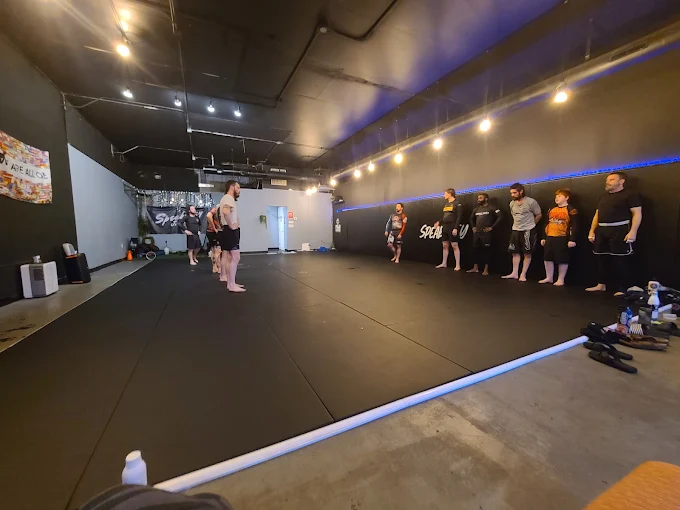
Jiu-Jitsu gives you a rare mix of fitness, self-defense, and calm under pressure that you can feel in everyday life.
If you have been curious about Jiu-Jitsu in Asheville, you are not alone. We have watched Brazilian Jiu-Jitsu move from a niche interest into one of the most practical ways adults train for real fitness, real self-defense, and real personal growth. It is not just about learning moves. It is about learning how to think when things get uncomfortable, and how to keep showing up anyway.
One of the biggest surprises for new students is how approachable Jiu-Jitsu can be. You do not need to be the strongest person in the room to make progress. The art is built around leverage, timing, and position, so your results come from understanding and repetition, not brute force.
In Asheville, that matters. Our community is active, health-minded, and often looking for a training option that builds strength without beating your joints up the way some high-impact sports can. Jiu-Jitsu fits that lane well, especially when classes are structured for beginners and taught with safety as a priority.
Why Jiu-Jitsu is taking off in Asheville
Asheville has a culture that rewards consistency. People here hike, climb, run trails, lift, paddle, and generally like to stay moving. Jiu-Jitsu adds something many fitness routines do not: a measurable skill that grows over time, and a training environment that quietly teaches discipline.
When you train regularly, you start noticing changes that go beyond the scale or the mirror. You breathe differently under stress. You think more clearly when you are tired. You stop panicking in bad positions and start solving problems. That shift is a big part of why adult Jiu-Jitsu in Asheville has become a go-to option for people who want results that last.
There is also the social side. Jiu-Jitsu is one of those rare activities where you can train hard, laugh a little, and build trust with people you just met, all in the same hour. You learn quickly that progress is not a solo project. Training partners matter.
What makes Jiu-Jitsu different from typical workouts
Technique over strength (and why that is good news)
A good Jiu-Jitsu class rewards details. Small changes in hip angle, grips, posture, and pressure add up fast. This is why beginners can improve even if they do not consider themselves athletic. As you learn how to create leverage, your training starts to feel more efficient.
That does not mean strength is irrelevant. It just means we build it in a smarter way. You develop functional strength through movement patterns like bridging, shrimping, standing up in base, and controlled grappling rounds. Over time, your body adapts, and you feel it in daily life, like carrying groceries, moving furniture, or keeping your balance on uneven trails.
A skill you can pressure test safely
Many fitness programs make you sweat, but they do not give you a reliable way to test whether you are actually improving at something. Jiu-Jitsu does, through controlled sparring. You practice techniques, then you apply them with a partner who is giving realistic resistance, while we keep the environment structured and supervised.
That pressure-testing is where confidence becomes real. You learn that you can stay calm, protect yourself, escape, and problem-solve. That is not motivational talk. It is a repeatable experience that builds evidence in your own mind.
Strength, conditioning, and body awareness you can feel
Jiu-Jitsu training tends to develop a specific kind of conditioning: steady output, strong grips, resilient core strength, and the ability to keep working when your heart rate climbs. You will sweat, but you will also learn to relax at the right moments, which is a sneaky skill that helps everywhere else.
We also focus on body awareness. New students often realize how much they hold tension in their shoulders, jaw, and hands. Over time, you learn when to stay tight and when to soften, which improves movement and reduces fatigue.
Here are a few physical benefits many adults notice after consistent training:
• Better core strength from repeated bridging, framing, and rotating under control during drills and sparring
• Stronger posture and neck stability from learning safe alignment in top and bottom positions
• Improved mobility in hips and shoulders because warmups and techniques demand usable ranges of motion
• More balanced conditioning because rounds train both short bursts and sustained effort
• Increased coordination from learning to connect hands, hips, and feet as a system instead of isolated parts
Discipline that shows up off the mat
Discipline in Jiu-Jitsu is not about being intense all the time. It is simpler, and honestly more useful: you show up, you do the work, and you stay coachable. Training gives you a structure where effort is rewarded, but ego gets corrected quickly.
We build discipline through:
Clear fundamentals and repeatable routines
Fundamentals are not glamorous, but fundamentals are what keep you safe and help you grow. We spend time on posture, frames, escapes, guard retention concepts, and top control. Repetition builds confidence because you start recognizing patterns, not just memorizing moves.
Consistent feedback and measurable progress
Jiu-Jitsu gives you constant information. If a technique works, you feel it. If your base is off, you learn fast. That feedback loop creates focus. You stop guessing and start refining.
National survey data from nearly 2,000 practitioners also shows that progress tends to follow a steady timeline when training is consistent. As an example, average time from white belt to blue belt is about 2.3 years, and purple belt averages about 5.6 years to earn. That is not meant to rush you. It is meant to show that patience is normal in this sport, and staying consistent is the real superpower.
Confidence that is earned, not imagined
People often say martial arts builds confidence, but we like to be specific about how. Confidence comes from doing hard things in a controlled environment, then realizing you can handle more than you thought.
In Jiu-Jitsu, you get used to discomfort in small, safe doses. Somebody passes your guard. You get pinned. You feel stuck. Then you learn an escape, you drill it, and you hit it live. That sequence changes the way you see challenges. You stop treating pressure as a signal to quit. You treat it as a signal to work the problem.
That carries over into normal life in Asheville, whether it is presenting at work, handling conflict, parenting with more patience, or simply feeling safer walking to your car at night.
What to expect in our adult program
Adult classes are designed to meet you where you are. Some students come in with an athletic background, and some have not trained anything in years. We coach both.
A typical class includes a warmup that prepares joints and movement patterns, focused technique instruction with drilling time, and then live training that fits the room. Some days the live rounds are light and technical. Other days you work harder. We adjust based on skill level, goals, and what the group needs.
If you are specifically looking for adult Jiu-Jitsu in Asheville, you will appreciate that evening classes make it easier to train after work. You can also use the class schedule to plan a realistic routine, which matters more than most people think. Two consistent days per week beats a heroic week once a month.
Wrestling integration for well-rounded grappling
A common gap in grappling is the transition between standing and the ground. Jiu-Jitsu is famous for ground control and submissions, but wrestling adds a direct, practical layer: how to close distance, pummel for position, finish takedowns, and stay balanced when somebody is trying to put you on your back.
We integrate wrestling concepts so you develop confidence in:
Getting to the ground on your terms
In self-defense and in sport, the ability to decide where the fight happens matters. Wrestling fundamentals help you stay upright, create angles, and finish takedowns with control when appropriate.
Maintaining top pressure and scrambling safely
Wrestling teaches you to keep moving with intention. When scrambles happen, you learn how to base, how to build up, and how to avoid giving away easy positions. That makes your Jiu-Jitsu more complete, and it makes sparring feel less like chaos.
Safety, injuries, and how we manage risk
We take safety seriously, and it is worth talking about plainly. Research and surveys in grappling show injury risk rises with experience and intensity. One dataset indicates that by purple belt, practitioners report roughly a 50 percent chance of injury, with risk continuing to climb for advanced athletes, especially in competition settings.
We cannot promise a zero-risk sport, because honest coaching does not work that way. What we can do is create a training culture and structure that reduces avoidable risk.
We emphasize:
1. Controlled intensity, especially for newer students, so your body adapts without getting thrown into the deep end
2. Tapping early and often, and respecting taps instantly, every time
3. Clear rules for positional sparring and full rounds, so you know what you are agreeing to
4. Technical coaching that prioritizes alignment and leverage, reducing strain on joints and neck
5. Smart consistency, meaning steady training with rest and recovery, not random max-effort sessions
If you have old injuries or just feel nervous, tell us. We can scale training, adjust rounds, and keep you progressing safely.
Belt progression in plain language
Belts matter less than skill, but they do provide useful milestones. If you like having a map, here is a simple way to think about it:
• White belt is where you build survival skills, escapes, and the ability to stay calm
• Blue belt is where your fundamentals start working reliably against resistance
• Purple belt is where you combine techniques, set traps, and teach newer students by example
• Brown belt is refinement, pressure, and making your best game hard to stop
• Black belt is long-term mastery, and it usually reflects years of steady practice
Progress is not linear. Some months you feel unstoppable. Other months you feel like you forgot everything. Both are normal, and both are part of learning.
Take the Next Step
Building strength, discipline, and real confidence does not require you to be fearless or perfectly in shape. It requires a place where technique is taught clearly, where training partners take care of each other, and where you can show up consistently without feeling lost.
That is exactly what we aim to provide at Speakeasy Jiu-Jitsu & Wrestling Academy here in Asheville. If you are ready to try Jiu-Jitsu in Asheville for practical fitness, self-defense, and a mindset you can carry anywhere, we would love to have you train with us.
Improve your fitness, confidence, and grappling ability by joining a Jiu-Jitsu class at Speakeasy Jiu-Jitsu & Wrestling Academy.