

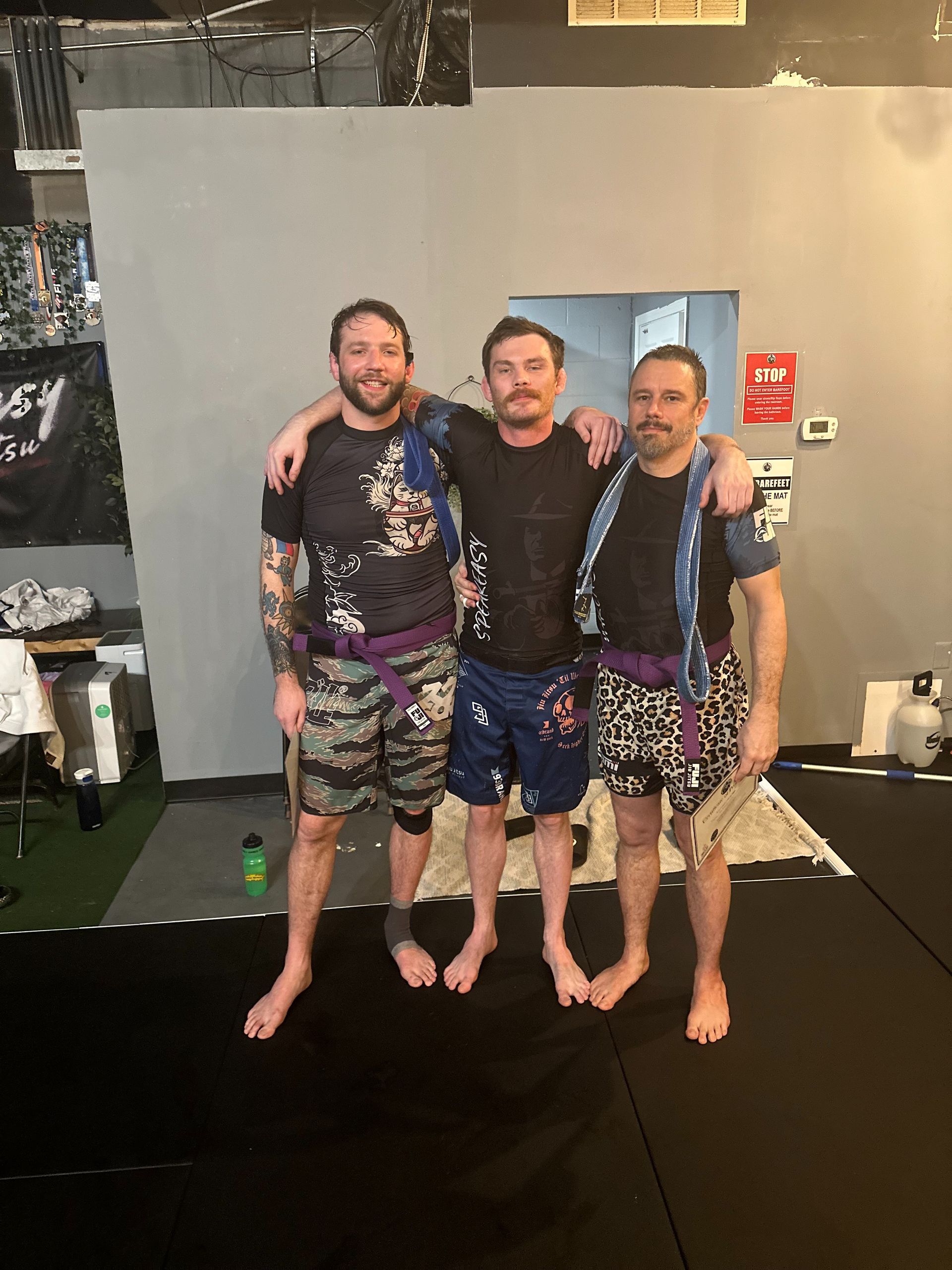
When your whole household trains together, confidence stops being a goal and starts becoming your normal.
Families around Asheville are busy in a very particular way: school drop offs, work, practices, homework, and the constant feeling that quality time gets squeezed into the cracks. We built our Jiu-Jitsu programs to change that pattern by giving you a shared challenge that is fun, structured, and surprisingly practical.
Jiu-Jitsu works for families because it meets everyone where we are. Kids need clear boundaries and positive coaching. Adults want real skill, real fitness, and stress relief that does not require an extra hour of planning. Our classes are designed so you can grow at your own pace while still feeling like you are doing something together.
If you have wondered whether martial arts can be family friendly without being watered down, the answer is yes. With safe training habits, clear coaching, and a culture that welcomes beginners, family training becomes one of the most consistent ways to build confidence and connection in everyday life.
Why Jiu-Jitsu is a powerful family activity in Asheville
Jiu-Jitsu is a close contact sport, so safety and structure matter. That is exactly why it fits families so well when the environment is right. In class, you learn to stay calm while solving problems, use leverage instead of strength, and respect training partners. Those lessons carry into family life in a pretty direct way.
Asheville is active. Hiking, biking, climbing, and outdoor weekends are part of the local rhythm. Jiu-Jitsu complements that lifestyle by building usable strength, joint stability, and conditioning without requiring you to be a lifelong athlete to start. We see parents who want to feel capable again and kids who want to feel brave in their own skin, and the same training can serve both.
Most importantly, Jiu-Jitsu gives families a shared language for growth. You start noticing small wins: better posture, better listening, more patience, and the ability to try again after a mistake. Those are not just gym outcomes. Those are life outcomes.
What family training looks like in our academy
We run a structured environment where you always know what you are walking into. That predictability matters for kids, and it matters for adults who want to trust the process. Classes focus on fundamentals, safe drilling, and controlled sparring when you are ready. We keep things progressive so you are not thrown into the deep end on day one.
Parents often ask if they can train while their kids train. In many cases, yes, and we also help you coordinate a routine that makes sense with the class schedule. Some families like coming in on the same days and making it part of the week. Others rotate, with one parent training while the other watches, then swapping later. We can talk it through and keep it realistic.
We also care about the details that make a training space feel welcoming: how people greet new students, how coaches correct technique without making it awkward, and how we keep the room focused but not tense. You should leave feeling tired, more capable, and genuinely glad you showed up.
The values we train, not just the techniques
Technique matters, but values keep families consistent long enough to see real change. Our coaching keeps coming back to a few pillars that show up across kids and adult classes.
• Confidence that is earned through repetition, not hype, so you know what you can do under pressure
• Discipline that feels like a routine you can keep, not a punishment you have to endure
• Resilience that comes from tapping, learning, and trying again without spiraling
• Focus that improves because you are solving real problems in real time, with a partner
• Respect for training partners, coaches, and yourself, because safety and progress depend on it
Those are the traits families tell us they notice at home: better follow through, calmer responses, and a little less quitting when things get hard.
Kids classes: confidence, boundaries, and real movement skills
Kids do not need to be toughened up. They need to be guided. In our kids program, we teach Jiu-Jitsu in a way that is engaging and age appropriate while still building legitimate skills. We emphasize positions, balance, movement patterns, and simple controls that help kids understand how to stay safe and how to respond when someone invades their space.
A big part of kids success is learning how to be coachable. That means lining up, listening, taking turns, and practicing with control. Those habits may sound small, but they add up fast. Kids start to understand that confidence is not something you wait for. It is something you build by doing the work, even on the days you feel a little unsure.
Families with children around 10 years old often ask if it is too late to start. It is not. Beginners do well when the coaching is clear and the environment is supportive. We see kids go from hesitant to engaged within a few classes, especially when parents reinforce consistency instead of perfection.
What a parent can watch for in the first month
The first month is about getting comfortable with the training room, learning basic positions, and building trust. Here are a few signs your child is settling in well.
1. Your child can describe a position or concept without needing the exact words
2. Your child starts moving with more balance and less stiffness during drills
3. Your child shows better emotional regulation after small setbacks
4. Your child talks about classmates and coaches in a positive, connected way
5. Your child begins taking pride in showing up on time and trying hard
Progress is rarely a straight line, but consistency creates momentum. When kids feel that momentum, confidence follows.
Adult training: skill, stress relief, and a stronger body that lasts
Adult Jiu-Jitsu in Asheville attracts a wide mix of people: parents, professionals, former athletes, and complete beginners. Most adults come in wanting one or two things, then discover they are getting a whole package. You build real self defense skill, but you also build fitness, mental resilience, and a healthier relationship with discomfort.
Training does not need to be brutal to be effective. We coach you to move efficiently, protect your training partners, and improve your technique in ways that do not depend on youth or raw athleticism. You can train hard without feeling wrecked. That matters for adults who want to keep up with work, family, and life.
We also keep the culture supportive for beginners. You do not need to know what you are doing to start. You need to be willing to learn, tap when you should, and come back. That is it. Over time, the awkward moments fade, and you start feeling at home on the mat.
Wrestling and Jiu-Jitsu: a seamless transition for many families
Asheville has plenty of families connected to scholastic sports, and wrestling backgrounds show up often. Wrestling and Jiu-Jitsu share a lot: balance, pressure, positional control, and the ability to keep working when you are tired. When someone transitions from wrestling into Jiu-Jitsu, the learning curve can feel exciting because you already understand effort and body awareness.
We also coach the differences clearly. Jiu-Jitsu includes submissions and guard work, and that changes how you think about risk and position. Learning those details in a structured way helps wrestlers broaden their skill set and helps parents understand what their kids are practicing and why.
For families, that means your child or teen can keep the competitive, disciplined benefits of grappling while learning a style that can be practiced year round with a deep technical path.
Safety, structure, and how we keep training family friendly
Safety is not a slogan. It is the system. We control intensity, teach tapping early, and pair students thoughtfully. Coaches watch rounds closely, and we keep communication open so you can tell us about injuries, concerns, or goals. If you are nervous about contact sports, that is normal. We would rather you ask questions than silently worry.
A few habits make a big difference in safe training:
• We teach you how to fall, frame, and protect your neck and joints from the start
• We emphasize controlled drilling before full resistance, so technique is learned correctly
• We use clear expectations around hygiene, nails, and gear to keep the room clean
• We coach you to choose training partners wisely and to match intensity appropriately
• We reinforce tapping as a smart decision, not an ego hit
When families trust the process, they show up more consistently. And consistency is what creates lasting change.
Common questions families ask before starting
Is Jiu-Jitsu suitable if we are complete beginners?
Yes. We teach fundamentals in a way that is accessible, and we do not expect you to know the rules on day one. You will learn positions, movement, and safety habits first, then build from there.
Can a parent and child both train, even if we start at different levels?
Yes. Many families start at different levels, and we help you choose classes that fit your schedule and experience. Over time, training becomes a shared routine even when you are not always in the same room.
What if I am not in shape yet?
You do not need to get in shape before starting Jiu-Jitsu. Training is how you build fitness. We scale intensity, and we focus on progress you can sustain.
Who will be coaching us?
Our head coach is Colton Parsons, a black belt under Kurt Chase Patrick, and our coaching team includes experienced instructors with strengths in wrestling, competition Jiu-Jitsu, and kids instruction. We take pride in being able to explain techniques clearly and keep classes organized.
Do you offer a trial?
Yes. We offer trial options so you can experience the environment, meet coaches, and see how the program feels before you commit.
How to make family Jiu-Jitsu stick long term
The hardest part of training is rarely the technique. It is the calendar. Families succeed when training becomes part of the week instead of an occasional event. We encourage you to start small and build consistency.
Pick two days you can protect. Put them on the calendar like an appointment. Talk about training in a positive, practical way at home. Not as a reward or a threat, just as something your family does. And if you miss a week because life happens, come back without making it a big deal. That bounce back is actually part of the skill.
Jiu-Jitsu gives families a rare combination: challenge and play, discipline and laughter, individual progress and shared experience. The mat becomes a place where you can work hard together and then walk out feeling more connected than when you walked in.
Ready to Begin
Building a stronger family bond takes more than good intentions. It takes a shared routine where everyone can grow, and where progress is measured in small, real changes you can feel week to week. That is the experience we aim to create every day on the mats.
At Speakeasy Jiu-Jitsu & Wrestling Academy, we keep the training structured, welcoming, and serious about safety so your whole household can develop confidence that lasts. If you want Jiu-Jitsu in Asheville that supports both kids and adults without losing the heart of the art, we are ready when you are.
See firsthand what makes training at Speakeasy Jiu-Jitsu & Wrestling Academy special by joining a Jiu-Jitsu class today.