

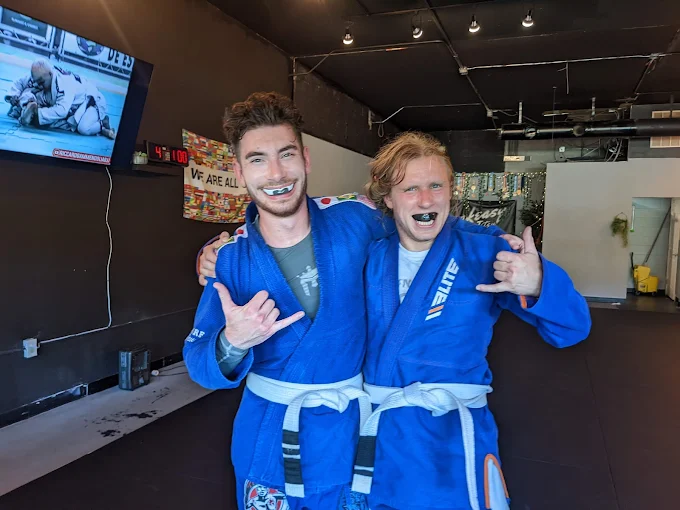
You do not need to be athletic to start, you just need a clear plan and a room where beginners are coached like beginners.
Starting Jiu-Jitsu can feel like walking into a new language class where everyone already speaks fluently. You might wonder if you are too out of shape, too stiff, too busy, or simply too new to belong on the mats. We get it, and we have built our beginner path in Asheville to remove the guesswork so you can focus on showing up and improving.
Jiu-Jitsu is also having a real moment in the wider grappling world, and not just as a trend. Elite competition data keeps reinforcing what beginners feel in their first month: the art rewards timing, leverage, and calm decision-making more than raw athleticism. That is good news if your goal is confidence, not just a hard workout.
In this guide, we will walk you through exactly how we recommend you start, what to expect in your first classes, and how to build skill safely over time. You will leave with a practical roadmap you can follow on the mat and in your schedule.
What Jiu-Jitsu really is (and why beginners usually overthink it)
If you have only seen highlight reels online, it is easy to assume Jiu-Jitsu is constant scrambling and dramatic submissions. The reality is more structured and more learnable. Brazilian Jiu-Jitsu emphasizes ground control, positional skill, and submissions, but most of your early progress comes from understanding where your body should be and how to stay safe while moving there.
A helpful way to think about it is this: positions are the foundation, escapes are the safety net, and submissions are the reward for doing the first two well. Even at elite events, submissions are common but not constant. For example, ADCC 2024 showed a 34 submission rate, consistent with prior years, which tells us something important: good grapplers spend a lot of time hand-fighting, controlling, and advancing position before anything flashy happens.
For beginners, that is comforting. You do not have to chase taps on day one. You build confidence by learning how to breathe, frame, escape, and reset.
Your beginner timeline in Asheville: what progress actually looks like
One of the most common fears we hear is, How long does it take to get good. The honest answer depends on consistency, recovery, and how you train, but we can still give you real-world expectations.
A large 2024 and 2025 survey of nearly 2,000 practitioners found average time at white belt was about 2.3 years, and many people reach blue belt around that point. Purple belt averaged 5.6 years total training time, brown around 9.0 years total. Those numbers are not meant to intimidate you. They are meant to set realistic expectations so you can relax and enjoy the process.
We would rather you train in a way you can sustain for years than burn out in six weeks. Confidence comes from repetition and wins you can measure, like escaping side control today when it crushed you last month.
Step 1: Show up with the right goal for your first month
Your first month should not be about winning rounds. It should be about building a base that makes everything else easier later. We focus on three early outcomes:
• Feeling safe in common positions so you do not panic
• Learning a small set of movements you can repeat under pressure
• Understanding the etiquette and rhythm of class so you can relax and learn
When you stop treating every moment like an emergency, you start seeing patterns. And once you see patterns, your confidence grows fast.
Step 2: Learn the safety habits that keep you training
Jiu-Jitsu is a contact sport, and it comes with real injury risk, especially when people train without structure. A 2019 study reported 59.2 percent of athletes had at least one injury in the prior six months. It also suggested training injury risk can be higher for novices, while competition becomes riskier for advanced athletes. We take that seriously, because staying healthy is not separate from progress, it is progress.
In our beginner environment, we emphasize the habits that reduce unnecessary wear and tear:
• Tap early, tap clearly, and never treat tapping as losing
• Choose control over speed, especially when learning new movement
• Ask questions when you are confused instead of forcing a scramble
• Train 2 to 3 times per week at first so your body adapts steadily
• Treat sleep, hydration, and basic mobility work as part of training
Confidence is not just knowing techniques. It is trusting that you can train hard without wrecking your body.
Step 3: Build your base on the ground before you chase submissions
Because Jiu-Jitsu is position-first, we teach beginners to win small battles that stack up:
Escapes first: your confidence engine
If you can escape mount, side control, and bad head-and-arm pressure, everything changes. You stop feeling trapped. You start taking smart risks. You begin learning faster because you are not stuck in survival mode the whole class.
Guard fundamentals: learning to protect yourself and attack
Guard is the heart of Jiu-Jitsu for many beginners because it gives you a way to slow things down. We coach guard retention, basic sweeps, and how to stand back up when the moment is right. This is where technique starts beating strength in a way you can feel.
Simple submissions, taught as a result of position
We still teach submissions early, but we treat them like punctuation, not the whole sentence. You learn how to control posture, isolate an arm, and finish with mechanics, not with squeezing until your face turns red.
Step 4: Add wrestling the smart way (because standing matters now)
A big modern shift in no-gi is the surge of wrestling integration. ADCC 2024 recorded 62 takedowns in the men’s divisions alone, more than all 2022 categories combined. That is not a small detail. It reflects what everyday students are realizing too: if you can choose where the fight goes, you gain options and confidence.
We bring wrestling into your Jiu-Jitsu progression in a way that is beginner-safe. That means we do not start with explosive shots across the room. We start with balance, stance, and hand-fighting that protects your neck and knees.
Here is a simple progression we like for newer adults in Asheville:
1. Stance and movement that keeps you stable, not hunched and tense
2. Hand-fighting basics like collar ties, inside control, and clearing grips
3. Takedown entries that prioritize position and angles over speed
4. Clinch awareness and how to disengage safely when you need to reset
5. Top control after the takedown so the work actually counts on the ground
When you combine clean takedowns with calm ground fundamentals, you stop feeling like you are gambling every time you start standing.
Step 5: Understand gi and no-gi without getting pulled into the debate
Beginners often ask whether they should start in the gi or no-gi. Our answer is practical: both can build strong grappling, but the gi is a powerful teacher early on.
Even in a no-gi spotlight era, high-level data still shows gi foundations matter. All ADCC 2024 champions had gi backgrounds. That does not mean you must be a gi specialist forever. It means the gi often builds grip fighting, posture control, and positional discipline that transfers extremely well.
If your goal is confidence, the gi can slow the game down just enough to help you feel what is happening. No-gi can feel faster and slipperier at first, but we coach it with the same fundamentals so you are not just chasing speed.
What you will feel in your first few classes (and why that is normal)
We want you to know what is normal so you do not interpret it as failure.
You will probably feel awkward with movement at first. That is not because you are uncoordinated. It is because Jiu-Jitsu uses angles, hip movement, and pressure in ways most people have never practiced. Your brain is building new maps.
You may also feel mentally tired. Learning positions, names, grips, and timing is a lot. That mental fatigue is a sign you are actually learning, not just sweating.
And yes, you might feel a little humbled. The good news is that the room does not punish beginners for being beginners. We coach you through it, because the goal is not to test you, it is to build you.
A realistic weekly schedule for adult beginners in Asheville
We like training that fits into real life. Asheville has hiking, physical jobs, desk jobs, and everything in between, so we plan for recovery and consistency.
A sustainable starting point for adult Jiu-Jitsu in Asheville often looks like this:
• Two classes per week for the first month to build consistency
• Add a third class when soreness becomes manageable and movement feels familiar
• Include one easy recovery day with walking, light mobility, or gentle stretching
• Keep at least one full rest day so you actually absorb the work
The goal is to make training something you can keep doing when work gets busy, not something you quit when life happens.
How we measure progress without obsessing over belts
Belts matter, but they are not the only scoreboard. The average time to blue belt is commonly around 2.3 years, and that is perfectly normal. We focus on progress you can feel week to week:
• You escape faster, with less panic
• You hold top position longer without muscling
• You recognize a bad setup before it happens
• You breathe more evenly during sparring
• You can explain what went wrong and fix it next round
That last one is a huge confidence marker. When you can diagnose your own mistakes, you stop feeling lost.
Common beginner questions we answer every week
Is Jiu-Jitsu safe if I am over 30
Yes, with smart progression. The injury data across the sport reminds us to take training habits seriously, especially early on. We control intensity, pair you thoughtfully, and teach you how to protect yourself. Your job is to communicate and tap early.
Do I need to be strong or flexible
No. Strength and flexibility help, but technique matters more. We teach you how to create leverage, use frames, and move your hips efficiently. Over time, you will get stronger in the exact ways grappling demands.
Will I be forced to spar on day one
We introduce sparring progressively. Positional rounds and guided drilling let you build confidence before full free rolling becomes a regular part of your week.
What if I feel anxious about looking inexperienced
That feeling usually fades quickly. Most people in the room remember exactly what their first class felt like. We keep coaching clear and the environment respectful, because learning is the point.
Start Your Journey
Building confidence through Jiu-Jitsu is not about becoming fearless, it is about becoming capable in small, repeatable ways. When you know how to stay safe, escape pressure, and make good decisions under stress, that steadiness tends to show up everywhere else too, from posture to focus to how you handle tough days.
We built our beginner pathway at Speakeasy Jiu-Jitsu & Wrestling Academy to be structured, realistic, and welcoming for adults in Asheville, with a blend of Jiu-Jitsu fundamentals and wrestling-informed stand-up that matches where the sport is going. If you are ready for a first step that is clear and coached, we would love to train with you.
No experience is needed to begin. Join a Jiu-Jitsu class at Speakeasy Jiu-Jitsu & Wrestling Academy today.