

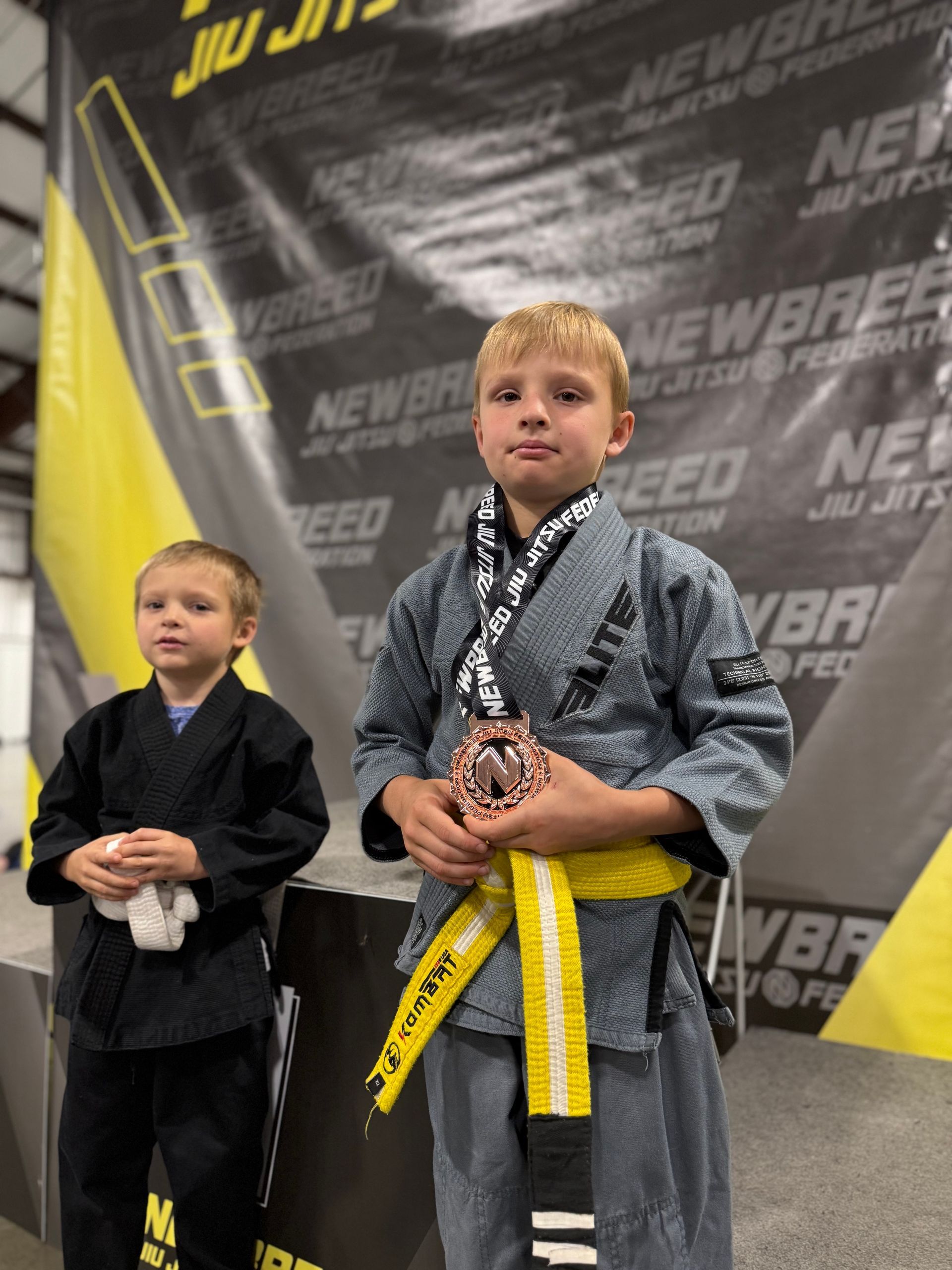
Jiu-Jitsu turns small choices on the mat into habits you can feel in your focus, your fitness, and your everyday follow-through.
In Asheville, it is easy to stay active but it is not always easy to stay consistent. That is where Jiu-Jitsu shines. We see it every week: you show up a little tired, you learn one detail, you solve one problem, and you walk out steadier than you walked in. Over time, that pattern becomes discipline you can rely on.
Jiu-Jitsu is also unusually practical for adults because it rewards timing, leverage, and decision-making more than raw strength. If you have ever felt like fitness plans depend on motivation alone, our approach feels different. Here, progress is measured, repeatable, and honest, which is exactly why it translates so well into daily growth.
When people search for Jiu-Jitsu in Asheville, many are not just looking for a workout. You want structure, coaching, a community that keeps you training, and a skill set that feels real. That is what we build our programs around, one class at a time.
Why Jiu-Jitsu builds discipline differently than most fitness routines
The discipline you get from Jiu-Jitsu is not the loud, hype kind. It is quieter. You learn to keep promises to yourself, even when nobody is watching.
You train in feedback, not fantasy
Every round gives immediate information. If a grip is wrong, it fails. If your posture breaks, you feel it. That kind of feedback loop builds a disciplined mindset because you are not guessing. You are adjusting, testing, and improving in real time.
You practice staying calm under pressure
Grappling creates pressure on purpose, but in a controlled, coached environment. Learning to breathe, frame, and think while someone is resisting is a mental skill. The surprising part is how quickly it carries over into normal stress: work deadlines, family tension, even the mental noise of a busy week.
You learn to be consistent, not intense
A single hard workout can feel great, but discipline is built by repetition. We coach you toward steady training, smart pacing, and sustainable growth so your Jiu-Jitsu practice becomes a routine you can keep.
What daily growth looks like on the mat and off it
Daily growth is not always dramatic. Often, it is small, almost ordinary, and that is why it sticks.
Better decision-making in small moments
You start noticing how often Jiu-Jitsu asks you to choose: escape now or later, move your hips or adjust your frame, take the safer route or gamble. That habit of making clear decisions shows up outside the gym too. You become less reactive and more deliberate.
Stronger habits around health and recovery
Training regularly encourages better sleep, hydration, and mobility, because you feel the difference when you skip them. The mat is a pretty honest mirror. If you stay up too late, your timing suffers. If you ignore recovery, your body complains. Over time, we see students build healthier routines without forcing it.
Confidence that comes from competence
There is a big difference between hoping you can handle a tough situation and knowing you have trained through difficult positions before. Jiu-Jitsu builds confidence through skill, not just positive thinking.
Our coaching approach: technique first, safety always
We teach Jiu-Jitsu as a technical art. That matters because technique scales. It works when you are tired, when you are smaller, and when life is not perfectly set up for you.
Why leverage matters for adult training
Adults walk in with different histories: old sports injuries, tight hips, desk-job posture, or simply limited time. A leverage-based approach lets you build skill without needing to “win” practice rounds through strength. We emphasize positioning, balance, grips, and pressure in a way that supports long-term training.
A realistic view of injury risk, and how we manage it
Grappling has injury risk, and it is smart to talk about it plainly. A 2024 and 2025 survey of nearly 2,000 practitioners reported that 59.2 percent experienced at least one injury over six months. The same data showed newer students reported more training injuries, while advanced belts saw more injuries in competition settings.
We reduce risk with coaching habits that sound simple but matter a lot: controlled intensity, clear tapping culture, structured rounds, and reminders to train for tomorrow, not just for today. You will still work hard, but you will learn to work smart.
The discipline of progress: what belts and timelines really teach you
Belts are not just colors. They are a long-term lesson in patience.
National survey data suggests average progression timelines like these:
- White to blue belt: about 2.3 years on average
- Time spent at blue belt: about 3.3 years on average
- Time spent at brown belt: up to about 4.4 years on average
We share these numbers because they set expectations correctly. Jiu-Jitsu is not a 30-day challenge. It is a practice. When you commit to that reality, discipline becomes less about forcing yourself and more about building a rhythm you can live with.
Adult Jiu-Jitsu in Asheville: fitting real life, not ideal life
Most adults are balancing work, family, and a crowded calendar. Our job is to make training workable, not complicated.
Class structure that supports busy schedules
We keep our class schedule practical, with evening options for adults and additional training opportunities that help you stay consistent. That consistency is where daily growth comes from. If you can train two or three times a week for months, you will feel the difference in your body and your mindset.
Training partners matter more than people think
A supportive room changes everything. When your training partners are thoughtful, you can push yourself without feeling reckless. You also learn discipline through accountability. If you know people expect to see you, you show up. That is not pressure. It is community.
Wrestling integration: a practical edge for grappling and growth
We blend wrestling into our grappling approach because it rounds out your skill set. Jiu-Jitsu teaches control and submissions, while wrestling builds strong fundamentals around takedowns, balance, and positional pressure.
What wrestling adds to your Jiu-Jitsu development
Wrestling sharpens habits that directly support your Jiu-Jitsu:
- Better base and balance when someone tries to off-balance you
- Cleaner takedown entries and safer ways to finish them
- More confidence in scrambles, where many beginners freeze
- Stronger top pressure and positional control without muscling
- Improved conditioning that comes from focused, technical movement
This is not about turning every round into a grind. It is about giving you more tools so you can solve problems calmly.
How local events and open mats accelerate discipline
Asheville has a strong grappling culture, and local events create a useful kind of motivation. When you know an open mat is coming up, you pay attention to details. When a tournament is on the calendar, you get more intentional about training, recovery, and mindset.
Pressure is a teacher when you use it correctly
Competition is optional, but it can be a powerful growth tool. It teaches you how to manage nerves, stick to a plan, and recover quickly from setbacks. Even if you never compete, training with that level of focus improves your daily discipline.
A simple way to prepare without burning out
If you want to test yourself at an event, we recommend a steady approach:
1. Train consistently for several months before you increase intensity
2. Add positional rounds that start from your toughest situations
3. Keep your strength and conditioning simple and repeatable
4. Prioritize sleep and mobility in the final two weeks
5. Review key grips and escapes, not a hundred new techniques
That kind of preparation helps you grow without turning training into a second job.
What to expect in your first month
Starting is usually the hardest part, mostly because it is unfamiliar. Once you have a few classes under your belt, it starts to feel normal in a good way.
In your first month, we focus on helping you understand the basics: how to move safely, how to tap, how to hold position, and how to stay composed when things speed up. You will learn quickly, but you will also repeat fundamentals a lot. That repetition is not boring. It is how discipline gets built into your nervous system, not just your memory.
You do not need to be “in shape” before you start. Training is how you get in shape, and we adjust intensity so you can keep showing up.
Take the Next Step
If you want Jiu-Jitsu in Asheville that builds lasting discipline, our goal is to make your training feel both challenging and sustainable, so you can grow without burning out. The habits you build here tend to show up everywhere else: better focus, steadier confidence, and a calmer response when life gets loud.
When you are ready, Speakeasy Jiu-Jitsu & Wrestling Academy is here with structured coaching, a welcoming room, and a clear path from day one through long-term progress. You bring the effort, we will help you shape it into something that lasts.
Experience how Jiu-Jitsu builds resilience and discipline by joining a class at Speakeasy Jiu-Jitsu & Wrestling Academy.