

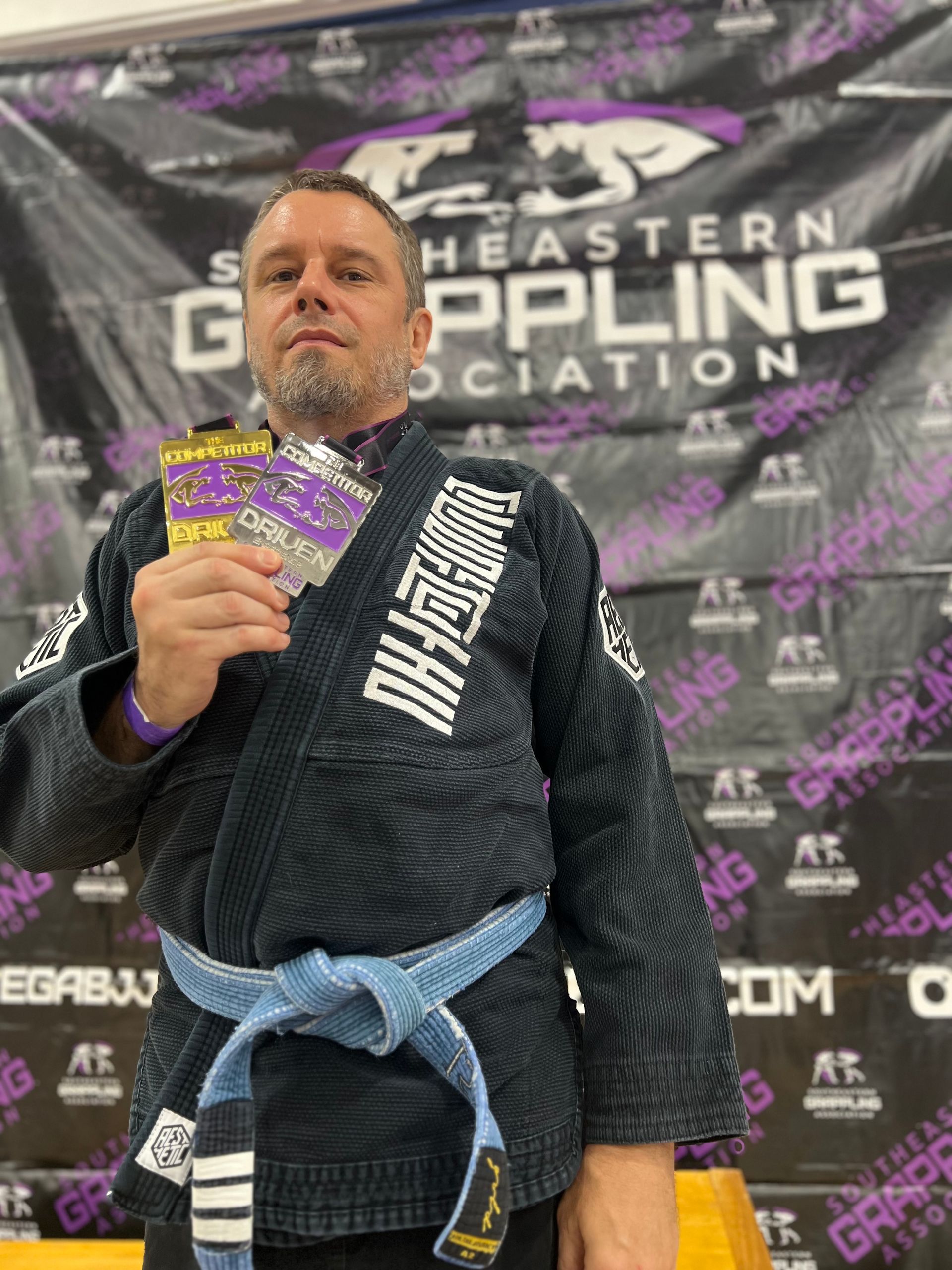
Real leadership shows up when you are tired, under pressure, and still choosing the right next move.
If you have ever wondered whether Jiu-Jitsu can change the way you carry yourself at work, at home, or in your own head, you are not alone. We hear that question often in Asheville, especially from adults who want something more than a workout. The truth is that Jiu-Jitsu is a skill you learn with your whole nervous system, not just your muscles, and that is why it tends to build leadership and confidence that actually sticks.
Our mats are where you practice making decisions when the clock is running and your breathing is loud. You learn to stay calm in close contact, communicate clearly, and solve problems in real time with another person who is actively resisting. That combination is rare, and it is exactly what makes this training so transferable.
Below are seven ways Jiu-Jitsu in Asheville can shape you into a steadier leader and a more confident adult, without turning you into somebody you do not recognize.
1. Pressure-tested decision making (the kind leaders actually need)
In leadership, it is easy to sound decisive when nothing is on the line. On the mat, you do not get that luxury. You have to choose: frame or escape, sweep or stand, attack or stabilize. If you hesitate, you feel it immediately, and that feedback is clean and honest.
Why this builds leadership fast
When you train, you practice making small decisions under controlled stress, again and again. Research on Brazilian Jiu-Jitsu points to improvements in decision-making under pressure and better stress management over time, which are core leadership traits. The practical result is that you get less reactive in daily life. You do not need to win every moment, but you do learn to choose the next best action.
What you will notice off the mat
You may find yourself pausing before speaking in a tense meeting. You might take a breath instead of sending the emotional text. The habit is the same: assess, choose, commit.
2. Emotional mastery that keeps you steady and readable
Leadership is not just confidence. It is composure. In Jiu-Jitsu, you learn what it feels like when adrenaline spikes, when frustration rises, when ego wants to fight for control. And then you learn to keep working anyway.
We coach you to treat emotions like data, not commands. That sounds simple, but it is a real skill. Studies connect grappling training with improved emotional regulation and reduced aggression, plus increases in empathy and interpersonal awareness. That matters because strong leaders read the room, and they also read themselves.
A small but powerful mat lesson
When you get caught, you tap, reset, and keep training. That tap is not failure. It is self-control made visible, and it is one of the most underrated leadership reps you can get.
3. Resilience built through safe, frequent failure
A lot of adults avoid beginner experiences because being new is uncomfortable. On the mat, being new is normal. You will get stuck. You will tap. You will have rounds where nothing works the way you planned. And then you come back next class and try again.
This is where lasting confidence is built. Not the loud kind, the quiet kind that comes from evidence. Research suggests experienced practitioners show higher levels of mental strength, resilience, grit, and self-efficacy compared to newer students, and these traits tend to rise with training time. In other words, the process works if you stay in it.
Why this is different from motivational hype
Confidence that lasts is not a feeling you talk yourself into. It is a record of kept promises to yourself: I showed up. I learned. I adapted. I stayed calm. Those receipts add up.
4. Progressive mastery that makes confidence measurable
One reason Jiu-Jitsu tends to create durable self-belief is that progress is structured. You can feel improvements in your balance, timing, and escapes, and you can also track milestones through the belt system. That structure matters for adults because life already feels chaotic. Training gives you a clear path.
Surveys and studies consistently show high percentages of practitioners reporting improved confidence, and higher ranks often correlate with greater self-control and life satisfaction. The belt is not the point, but it is a useful mirror: it reflects consistent work.
What we focus on in adult training
We keep the learning practical and layered. You will build a base of fundamentals, then add options. The goal is not to collect moves. The goal is to understand positions, solve problems, and get comfortable being uncomfortable.
5. Communication and trust built through live training
Leadership is a relationship skill. Jiu-Jitsu forces you to communicate with real people, in real time, while staying respectful. You learn quickly that you cannot train well without partners. That makes you a better teammate.
In class, communication shows up in simple ways:
- Asking for a slower round when you are learning something new
- Giving feedback about pace and intensity
- Checking in after a tough scramble
- Learning to accept coaching without taking it personally
- Practicing boundaries while staying kind
Those are leadership behaviors. They create trust. And trust is what makes teams work, whether the team is your workplace, your family, or your training group.
6. A mental health shield: less anxiety, more clarity
Many adults start training for fitness or self-defense, then realize the bigger payoff is mental. Grappling can reduce anxiety and depressive symptoms for some people, and research has also linked Jiu-Jitsu training to reduced PTSD symptoms in certain populations, including veterans and first responders. Even when you are not thinking about it in clinical terms, the pattern is clear: you practice stress in a controlled environment, and your system learns that stress does not always equal danger.
Why it helps in Asheville specifically
Asheville has a strong wellness culture, but it is also a place where a lot of people juggle demanding jobs, family responsibilities, and post-pandemic stress. Jiu-Jitsu fits here because it combines movement, mindfulness, and community. You are not just burning calories. You are learning how to settle your mind while doing hard things.
7. Skills that transfer into Asheville life: work, family, and community leadership
Jiu-Jitsu is a full-contact problem-solving practice. Once you have trained consistently, you start noticing transfer everywhere.
Common leadership carryovers we see
1. You get better at staying present in uncomfortable conversations.
2. You become more comfortable asking for help and receiving coaching.
3. You learn to de-escalate your own reactions before trying to influence anyone else.
4. You build patience, because good technique takes time.
5. You develop a calm kind of confidence that does not need to prove itself.
This is also where our wrestling integration matters. Wrestling sharpens control, pressure, and the ability to create or deny movement, which complements Jiu-Jitsu beautifully. For adults, that means you build a more complete grappling foundation: better balance, stronger base, and more confidence in transitions.
What to expect if you are new to adult training in Asheville
Starting adult Jiu-Jitsu in Asheville should feel structured and welcoming, not intimidating. You do not need to be in shape first. Getting in shape is part of the process. You also do not need to know the rules. We teach them, and we keep the room safe by setting expectations for pace and control.
Here is a simple way to get early momentum without overthinking it:
• Train 2 to 3 times per week so your body and brain can retain the patterns
• Focus on learning positions first, then submissions later
• Choose consistency over intensity, especially in your first few months
• Ask questions, even if you think they are basic, because basics are the whole game
• Track small wins like better breathing, cleaner escapes, and calmer reactions
Many adults notice a meaningful shift in confidence within 3 to 6 months when training is consistent. The biggest changes tend to show up in how you handle pressure, not just in what techniques you can do.
Ready to build real confidence with Speakeasy Jiu-Jitsu & Wrestling Academy
If you want leadership skills that are earned instead of imagined, Jiu-Jitsu gives you a place to practice them. You will learn to make decisions under pressure, regulate emotions, communicate clearly, and recover from setbacks, all while getting stronger and more capable along the way.
Our approach at Speakeasy Jiu-Jitsu & Wrestling Academy is built around adult development: solid fundamentals, live training that scales to your experience level, and coaching that helps you bring the lessons off the mat and into your life in Asheville.
Strengthen both your body and mind through consistent Jiu-Jitsu training at Speakeasy Jiu-Jitsu & Wrestling Academy.